
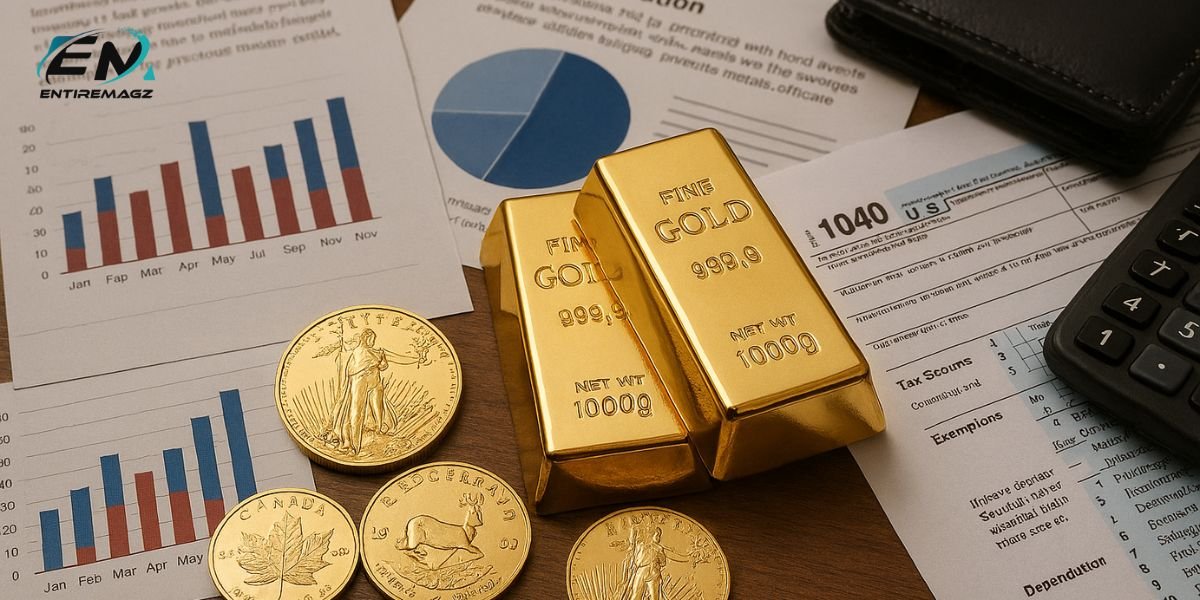
Marketing cycles change, but uncertainty doesn’t. As investors look toward 2026, many are rethinking how exposed their portfolios are to correlated risks. Stocks and bonds still matter, but they’re no longer enough on their own.
That’s where hard assets come in.
A hard-asset hedge isn’t about abandoning traditional investments. It’s about balance—adding assets that behave differently when markets, currencies, or systems come under stress. When built intentionally, a hedge helps protect purchasing power and preserves flexibility without disrupting long-term growth plans.
What Hard Assets Are Designed to Do
Hard assets are tangible or scarcity-based assets that tend to retain value independently of financial markets. They don’t move in lockstep with equities, and they’re less vulnerable to inflation, currency debasement, or sudden policy shifts.
Common examples include precious metals, commodities, real assets, and certain alternative structures designed to track physical value.
When investors explore physical exposure—such as reviewing recommended gold coins—the goal isn’t rapid appreciation. It’s resilience during periods when traditional correlations break down.
Start With Allocation Rules, Not Products
Before choosing specific assets, define how much of your portfolio should act as a hedge. For many investors, this ranges between 5% and 15%, depending on risk tolerance, time horizon, and liquidity needs.
Too small, and the hedge won’t meaningfully offset volatility. Too large, and you risk overexposure to assets that may not generate income or compound over time.
Allocation decisions should reflect:
- Existing diversification
- Income requirements
- Comfort with volatility
- The role the hedge is meant to play
Hard assets are a stabilizer, not a substitute for growth assets.
Liquidity Still Matters
A common mistake is assuming all hedges should be difficult to access. While some hard assets are naturally less liquid, others can be sold quickly with transparent pricing.
Liquidity determines how useful an asset is during market stress. If you can’t access value when you need it, the hedge may fail its purpose.
Ask early:
- How quickly can this asset be sold?
- Who are the buyers?
- Are transaction costs reasonable?
- Does pricing remain transparent during volatility?
Planning for liquidity reduces the risk of forced decisions later.
Correlation Is the Metric That Matters
Not all tangible or alternative assets behave as true hedges when markets turn. Some appear diversified during calm periods but fall back into correlation during stress events. That’s why correlation history matters more than labels.
Before adding any hard asset, review how it has behaved during past disruptions—not just inflationary cycles, but equity drawdowns and liquidity crunches. Assets that consistently move differently from stocks and bonds offer real diversification. Those that only feel different may provide less protection than expected.
Correlation analysis doesn’t need to be complex, but it does need to be intentional.
Physical Assets vs. Financial Exposure
There are multiple ways to gain hard-asset exposure, each with tradeoffs.
Physical assets provide direct ownership and avoid counterparty risk, but they require storage, insurance, and resale planning. ETFs and funds offer convenience and liquidity but introduce reliance on custodians and financial infrastructure.
Commodities funds track price exposure but may diverge from spot pricing due to roll costs and structure. Tokenized assets add portability and flexibility but come with platform risk and evolving regulatory frameworks.
Many investors choose a blend rather than relying on a single structure.
Custody Is a Risk Factor
Owning an asset is only half the equation. How it’s held matters just as much.
For physical assets, custody means choosing between home storage, bank vaults, or third-party depositories. Each option carries tradeoffs related to access, security, and insurance.
For brokerage-held assets, custody risk includes counterparty exposure and account security. Strong passwords alone are no longer sufficient.
Best practices include:
- Two-factor authentication
- Separate email accounts for financial logins
- Hardware security keys where appropriate
- Periodic access audits
Cybersecurity is now a core part of portfolio risk management.
Physical Gold Requires Extra Planning
Gold remains a cornerstone of hard-asset hedging, but physical ownership introduces additional considerations. One of the most important is resale.
Recognizability affects liquidity. Widely traded formats are easier to authenticate, price, and sell—especially during volatile periods. For that reason, many investors research common gold coins before purchasing, using primers that explain which coins are broadly accepted and actively traded.
Choosing recognizable options helps reduce friction when converting back to cash.
Taxes Can Change the Outcome
Hard assets often come with different tax treatment than traditional securities. Precious metals, for example, may be taxed as collectibles in some jurisdictions, affecting capital gains rates.
ETFs, futures-based products, and certain funds can also trigger taxable events without a sale, depending on structure.
Before building a hedge, understand:
- Short- and long-term gains treatment
- Reporting requirements
- Storage or vaulting considerations
- State-level differences
Tax awareness doesn’t eliminate risk, but it prevents avoidable erosion of returns.
Rebalancing Keeps the Hedge Functional
A hedge that’s never adjusted can drift out of alignment. If hard assets outperform, they may become overrepresented. If they lag, their protective role may diminish.
Set rebalancing rules in advance. Annual reviews are common, but market-driven thresholds can also work. The key is consistency.
Rebalancing reinforces discipline and helps prevent emotional decision-making.
The Point Is Optionality
A hard-asset hedge isn’t about predicting collapse. It’s about preserving optionality when conditions change.
In 2026, investors face layered risks—economic, technological, geopolitical, and systemic. Hard assets don’t solve all of them, but they reduce dependence on any single system working perfectly.
That flexibility is the real value of a well-built hedge.